Jellyfish Ephemera: Vintage Layers for Junk Journals
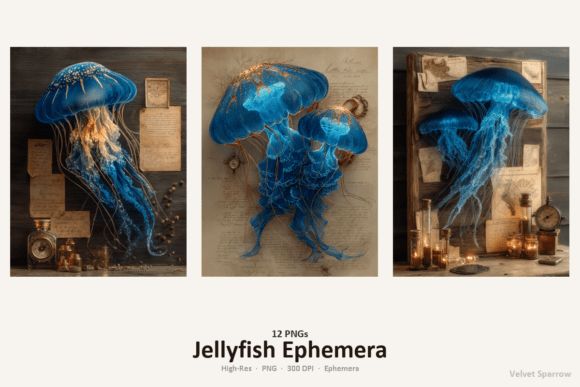
There is a specific kind of satisfaction that comes from holding a piece of paper that feels like it has already lived a life. It is not just about the ink on the page; it is about the texture, the implied history, and the way it interacts with the other elements in your composition. This is the core appeal of Jellyfish Ephemera. Unlike standard clip art or flat digital stickers, these twelve printable pieces are engineered specifically for layering. They are designed to be torn, stacked, glued over maps, and adhered to ledger paper, creating a cohesive narrative within your junk journals and scrapbooks.
For crafters, designers, and small business owners who sell handmade goods, understanding the utility of high-quality ephemera is essential. It is not merely decoration; it is a tool for building depth. When you download this collection, you are getting 300 DPI, full-color print-ready files that bridge the gap between digital convenience and tactile authenticity. Let us explore how these design assets can elevate your next creative project, whether you are altering a book, designing a planner dashboard, or creating unique greeting cards.
The Aesthetic of Accumulated History
The visual language of Jellyfish Ephemera is rooted in the concept of "found objects." In editorial design and mixed media art, the goal is often to make new elements look as though they have been discovered in an attic box or pulled from an old library book. These pieces achieve this through careful attention to edge detail and color saturation. They are not stark white or perfectly rectangular. Instead, they mimic the wear and tear of time.
When you print these on standard paper, the result is immediate versatility. You can tear the edges to reveal the fibrous texture of the paper underneath, creating a soft, organic border that blends seamlessly with vintage backgrounds. Alternatively, you can cut them precisely if your project requires a cleaner line, such as in structured planner layouts. The designs are sized for standard paper, making them accessible for home printers without requiring specialized large-format equipment.
This aesthetic is particularly powerful in junk journaling, where the narrative is non-linear and textural. By stacking these ephemera pieces, you create physical dimension. A piece glued over a map suggests travel; a fragment layered over ledger paper implies accounting or memory keeping. This interplay allows the creator to tell a story without writing a single word. For brand strategists and content creators, this serves as a reminder that context drives perception. Just as a font choice influences how a message is received, the physical presentation of a collage element influences how the viewer interprets the mood of the page.
Versatility Across Creative Mediums
While Jellyfish Ephemera is marketed toward junk journal enthusiasts, its application extends far beyond hobbyist scrapbooking. The principles of good collage work translate directly into professional design fields, including packaging design, social media graphics, and even web design textures. Here is how these digital downloads can serve various creative needs:
- Junk Journals and Art Journaling: This is the primary use case. Use the pieces to create pockets for tickets and receipts, or as focal points on spread pages. The vintage-inspired designs complement handwritten notes and watercolor washes.
- Altered Books and Decoupage: Because the images are high-resolution (300 DPI), they hold up well when adhered to three-dimensional objects. Consider using them to decorate furniture, boxes, or trays. The key here is sealing; once decoupaged and varnished, these paper elements become part of the object’s surface.
- Planner and Dashboard Decoration: For those who use physical planners, these pieces add a personalized touch to monthly spreads. They can function as headers, dividers, or decorative accents that break up the monotony of lined paper.
- Greeting Card and Envelope Design: Small business owners selling handmade stationery can use these assets to create unique, one-of-a-kind cards. Layering them on cardstock adds perceived value and artistic merit.
- Digital Mockups and Social Media: Photograph your finished layouts to create content for Instagram or Pinterest. The textured, layered look performs exceptionally well on social platforms where users scroll quickly for visual inspiration.
It is important to note that while these are digital downloads, their impact is physical. They require the user to engage in the act of making. This tangibility is increasingly valuable in a digital-first world. For entrepreneurs, offering products or content that encourage offline engagement can build a deeper connection with their audience.
Practical Tips for Printing and Durability
To get the most out of Jellyfish Ephemera, you must consider your printing materials and methods. The file quality is excellent, but the output depends entirely on your substrate and printer settings. Here are some professional recommendations for achieving the best results:
Paper Selection Matters. For junk journals and scrapbooks, standard copy paper (20–24 lb) is often ideal because it tears easily and absorbs glue without warping excessively. However, if you want a more substantial feel, try printing on lightweight cardstock. Avoid glossy photo paper unless you are specifically aiming for a shiny, modern contrast against matte backgrounds, as glossy paper does not accept pencil, ink, or watercolor well if you plan to write on top of the ephemera.
Waterproofing for Outdoor Use. A common question among crafters is how to make these pieces durable for items like water bottles or outdoor gear. Here is a pro tip: For waterproof stickers, print on printable vinyl rather than sticker paper. Printable vinyl is far more durable and resistant to moisture, UV light, and abrasion. This transforms a delicate paper asset into a rugged, long-lasting label. This technique is invaluable for small business owners creating product labels or branded merchandise.
Color Calibration. Since these are vintage-inspired, slight variations in color can enhance the aged look. However, if color accuracy is critical for your brand identity, ensure your printer is calibrated. Most home inkjet printers will reproduce the full-color designs faithfully, but laser printers may offer sharper lines if you are cutting intricate shapes.
Integrating Ephemera into Your Brand Identity
For marketers and publishers, the use of ephemera-style graphics can be a strategic component of brand identity. The "vintage" or "archival" aesthetic conveys trust, longevity, and craftsmanship. When used in packaging design or editorial layouts, these elements suggest that the brand values tradition and attention to detail.
Consider the psychological impact of layering. In web design, we use shadows and z-indexes to create depth. In print, we use actual physical layers. Jellyfish Ephemera allows you to bring that digital concept of depth into the physical world. This consistency between your digital marketing (which might use similar textured overlays) and your physical products (packaging, thank-you notes) creates a cohesive brand experience.
Furthermore, using pre-made design assets like this saves time. Instead of scanning old books or hunting for antique papers, you have a curated library of high-quality elements ready to deploy. This efficiency allows you to focus on the composition and storytelling aspects of your work, rather than the sourcing of raw materials.
Ultimately, Jellyfish Ephemera is more than just a set of printable images. It is an invitation to slow down and engage with the tactile process of creation. Whether you are a seasoned designer looking for quick textural elements or a hobbyist starting your first junk journal, these twelve pieces provide the foundation for endless creative exploration. Your next junk journal spread is one download away, and the only limit is how you choose to layer, tear, and arrange the stories you want to tell.